
Rituximab
verified Antineoplastic and immunomodulating agent.
info General information
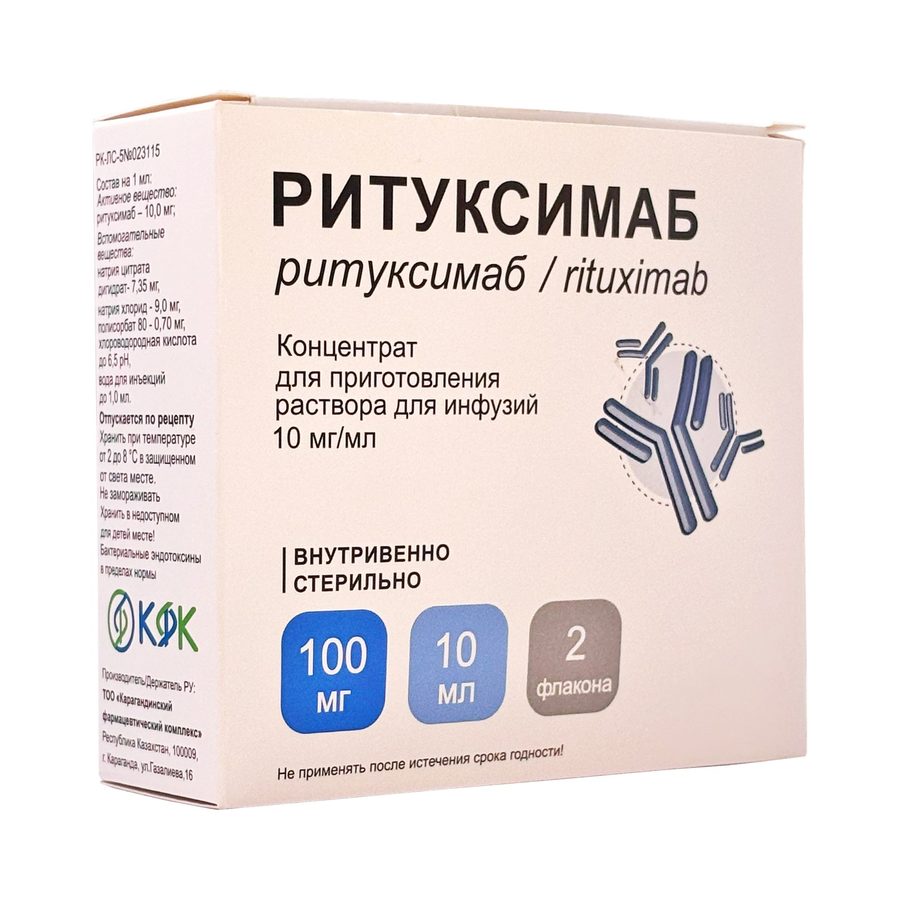
10 mL or 50 mL of the product in vials.
2 vials (10 mL each) in a blister pack. 1 blister pack is placed in a cardboard box.
1 vial (50 mL) is placed in a cardboard box.
assignment_turned_in Indications
Rituximab is indicated for patients with the following diseases:
Non-Hodgkin lymphoma
A disease of the lymphatic tissue (part of the immune system) that affects a type of white blood cell called B lymphocytes.
Rituximab is prescribed to adult patients alone or together with other medicines called "chemotherapy".
In adult patients who respond to treatment, Rituximab may be used as maintenance therapy after completion of the initial treatment.
Chronic lymphocytic leukemia
Chronic lymphocytic leukemia is the most common form of leukemia in adults. It affects B lymphocytes, which are formed in the bone marrow and develop in the lymph nodes. Patients with chronic lymphocytic leukemia have too many abnormal lymphocytes, which accumulate mainly in the bone marrow and blood. Rituximab in combination with chemotherapy destroys these cells, which are gradually removed from the body through biological processes.
Rheumatoid arthritis
Rheumatoid arthritis affects the joints. The B lymphocytes targeted by rituximab are involved in the development of some symptoms of rheumatoid arthritis.
Rituximab is used to treat rheumatoid arthritis in adult patients who have already been treated with other medicines that either stopped working, proved insufficiently effective, or caused adverse reactions.
Rituximab is usually used in combination with another medicine called methotrexate.
Rituximab slows joint damage caused by rheumatoid arthritis and improves the ability to perform daily activities.
Granulomatosis with polyangiitis and microscopic polyangiitis
Granulomatosis with polyangiitis and microscopic polyangiitis are two forms of blood vessel inflammation that mainly affects the lungs and kidneys, but may also affect other organs. B lymphocytes are involved in these conditions.
Rituximab is used in combination with glucocorticoids to treat adults and children aged 2 years and older with granulomatosis with polyangiitis (formerly known as Wegener's granulomatosis) or microscopic polyangiitis.
Pemphigus vulgaris
Pemphigus vulgaris is an autoimmune disease that causes painful blisters on the skin and on the mucous membranes of the mouth, nose, throat and genitals.
Rituximab is indicated for the treatment of patients with moderate to severe pemphigus vulgaris.